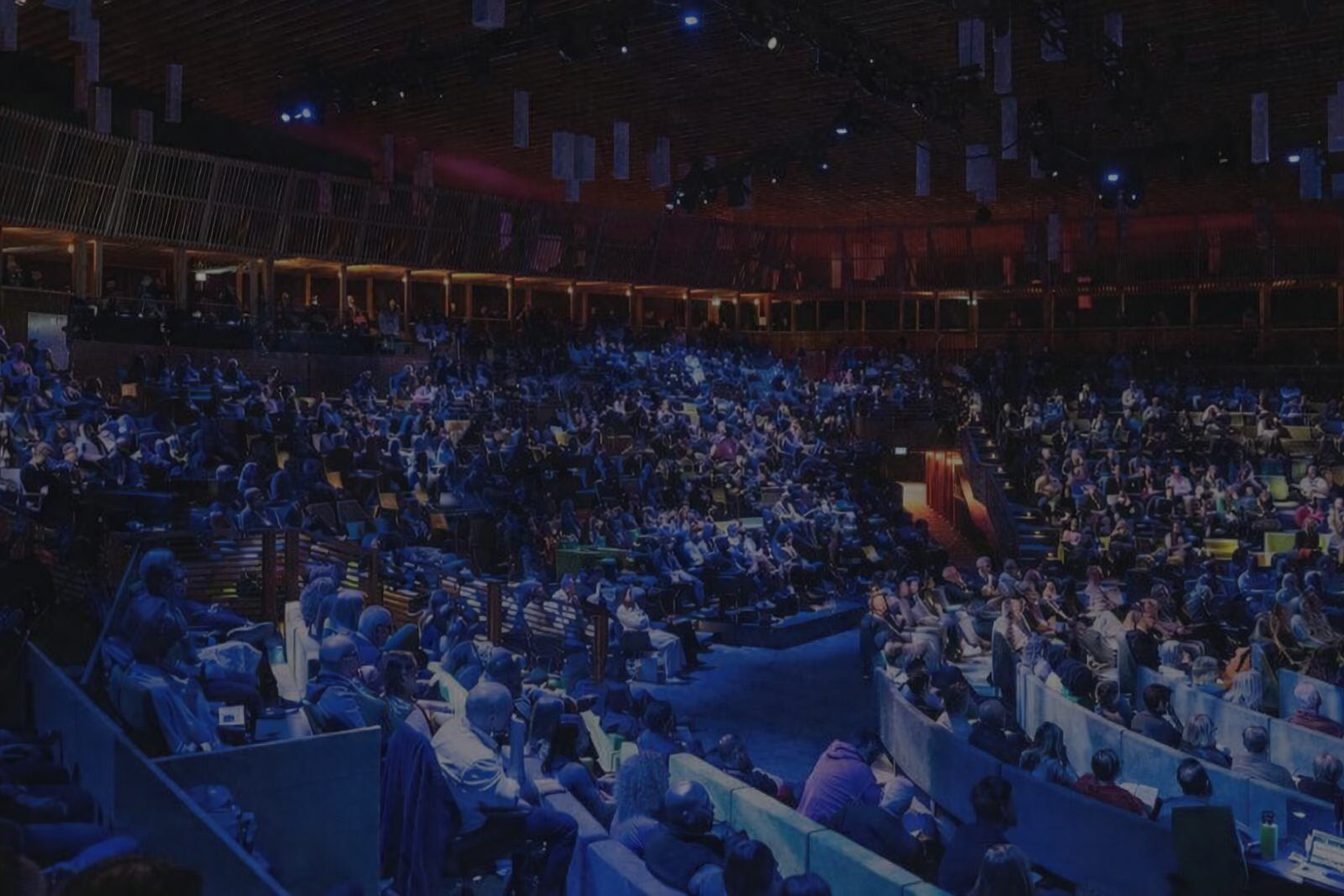
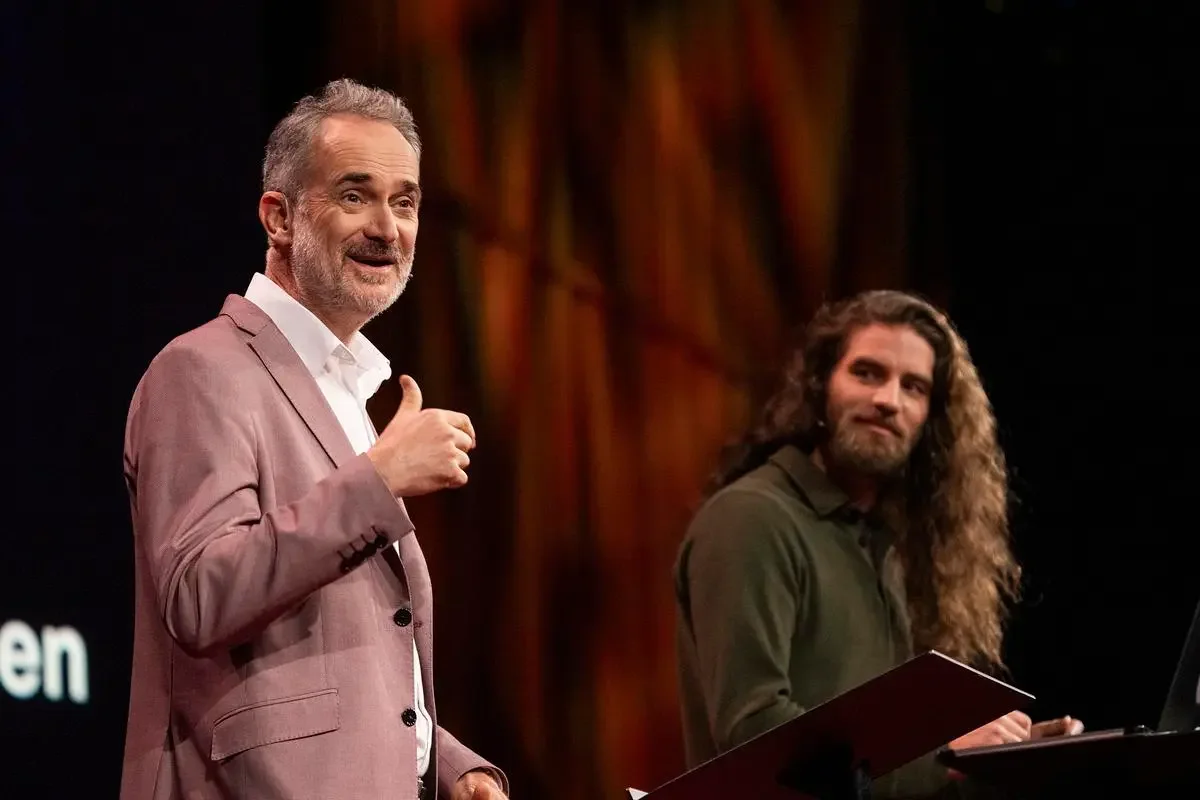
On April 15, 2026, Quiet Parks International's Matthew Mikkelsen (right) took the TED stage in Vancouver to share why quiet is one of humanity's most overlooked natural resources.
At TED 2026, biologist David George Haskell and Quiet Parks International's Matthew Mikkelsen invited the audience to listen to more than the human voice.
Together, they traced the ancient language of sound, from the first insect chirps to the layered symphonies of rainforests and oceans. Through a carefully crafted blend of storytelling and immersive audio, the session explored how sound has connected life on Earth for billions of years. As Haskell noted, "Sound is the original wireless communication network," connecting us to "voices often ignored, those of the more-than-human world."
Throughout the presentation, Mikkelsen transformed the theatre itself through a series of live natural soundscapes. Rather than simply speaking about quiet, he invited the audience into an experience of deep listening, weaving recordings from nature throughout the talk. The result was something uncommon in a TED theatre: a shared moment of attention and stillness.
The session also explored conservation through a sonic lens. As Mikkelsen shifted from natural soundscapes to human-made sounds, including trains and the roar of crowds, Haskell reflected on how humanity has altered the Earth's acoustic environment. While people have contributed music and many beautiful sounds to the world, habitat destruction and species loss are increasingly diminishing the planet's sonic diversity.
"Species extinctions diminish the Earth's sonic richness forever," Haskell reminded the audience, highlighting the importance of protecting not only landscapes and wildlife, but also the sounds that connect us to the living world.
Together, the speakers offered a powerful invitation: to listen more deeply, to recognize sound as a vital part of our shared heritage, and to consider what may be lost when natural soundscapes disappear.
The talk concluded with a reflection on the importance of listening as both a personal and ecological practice. Haskell encouraged the audience to "listen attentively" to the natural world and, in doing so, learn to value and protect it more deeply.
"Beauty and brokenness — listening opens us to both," Haskell said. "Coming back to our senses restores part of our agency, our humanity, makes us whole again, and gives us a foundation to be in right relationship with the living Earth."
Together, the speakers offered a powerful invitation: to listen more deeply, to recognize sound as a vital part of our shared heritage, and to consider what may be lost when natural soundscapes disappear.
Media Contact
Matt Mikkelsen, matt@quietparks.org